78. State Registration vs. U.S. Coast Guard Documentation: What’s the Difference and Which One Do You Need?
One of the Most Confusing Topics for Boat Owners
Many boat owners hear terms like:
- state registration
- Coast Guard documentation
- federally documented vessel
and assume:
👉 they are the same thing.
They are not.
And depending on:
- vessel size
- financing
- location
- usage
you may need:
- one
- the other
- or sometimes both.
State Registration
Most recreational boats in the United States must be:
👉 registered with the state.
This is similar to vehicle registration.
You typically receive:
- registration number
- decals/stickers
- registration certificate
Example:
- NJ numbers on bow
- FL registration decals
- NY registration certificate
When State Registration Is Common
Usually:
- smaller recreational boats
- trailered vessels
- personal watercraft
- many recreational powerboats
U.S. Coast Guard Documentation
Documentation is:
👉 federal vessel registration.
Handled through:
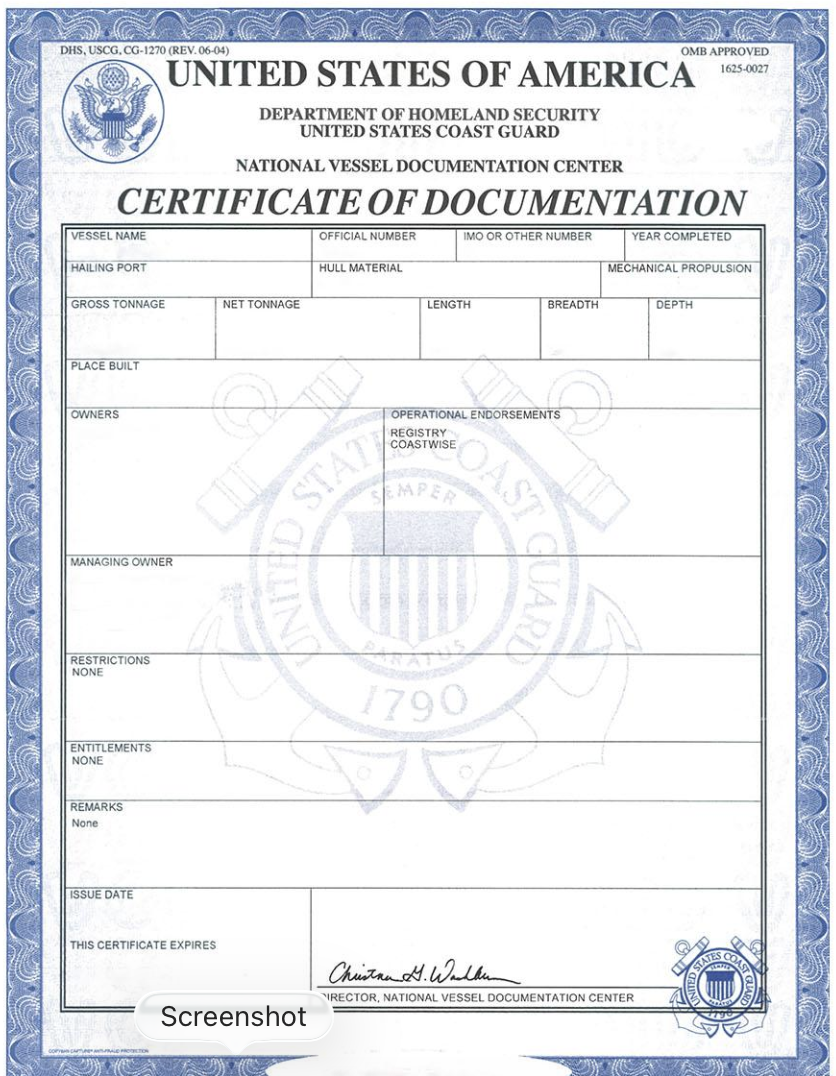
National Vessel Documentation Center
https://www.dco.uscg.mil/nvdc/
Documented vessels receive:
- official documentation number
- Certificate of Documentation
Instead of state numbers displayed on the bow.
What Boats Qualify?
Generally:
👉 vessels at least 5 net tons
Most boats:
- around 25 feet and above
- often qualify
But qualification depends on:
- volume
- construction
- vessel type
—not simply length.
Why Owners Choose Documentation
Common reasons:
- financing requirements
- preferred mortgages
- international travel
- commercial use
- easier federal identification
Important Commercial Use Distinction
Certain commercial operations may require:
👉 Coast Guard documentation with appropriate endorsements.
Examples may include:
- charter operations
- passenger service
- coastwise trade
This becomes especially important when money is involved.
Do You Still Need State Registration Too?
Depends on the state.
Some states require:
👉 state-issued decals even for documented vessels.
Others handle it differently.
Always verify your local requirements.
Major Difference in Appearance
State Registered Vessel
Displays:
- state registration numbers on bow
Example:
NJ 1234 AB
Coast Guard Documented Vessel
Displays:
- vessel name
- hailing port
And must carry:
👉 official documentation number permanently affixed internally.
Hailing Port Requirements
Documented vessels must display:
- vessel name
- hailing port
on the exterior vessel markings.
Example:
- “Hoboken, NJ”
- “Miami, FL”
Financing and Lenders
Many lenders prefer:
👉 documented vessels
because:
- documentation creates clearer federal identification
- preferred ship mortgages become possible
International Travel
Documentation may simplify:
- customs procedures
- foreign port entry
- proof of nationality
Especially in:
- Bahamas
- Caribbean
- international cruising
Common Mistakes
Many owners:
- assume documentation replaces all state obligations
- fail to renew documentation
- improperly display markings
Renewal Matters
Documentation must be:
👉 renewed periodically.
Failure to maintain it may create:
- compliance issues
- financing complications
- registration problems
Where to Apply
Federal documentation:
National Vessel Documentation Center
https://www.dco.uscg.mil/nvdc/
General boating guidance:
U.S. Coast Guard
Internal Links to Include
👉 Link to:
- Charter & Rental Hub
- MMSI Explained
- EPIRB Explained
- Captain Licensing Responsibilities
- Boat Ownership / Charter blogs
Suggested anchor text:
- “offshore boating safety”
- “commercial boating requirements”
- “charter operations”
- “marine communication systems”
Platform Note
Boat owners listing vessels on BoatnCrew.com should ensure their vessel registration and documentation status is accurate and compliant before offering charter or rental services.
Final Thought
State registration and Coast Guard documentation serve different purposes.
Understanding the difference is important not just for compliance —
but for financing, travel, insurance, and legal operation of your vessel.