73. Overloading a Boat: Safety Risks, Legal Exposure, and Captain Responsibility
One of the Most Dangerous Mistakes on the Water
Overloading a vessel is not a minor issue.
It affects:
- stability
- maneuverability
- freeboard
- stopping distance
- passenger safety
And when a professional captain is operating the vessel:
👉 responsibility becomes very clear.
The Capacity Plate Matters
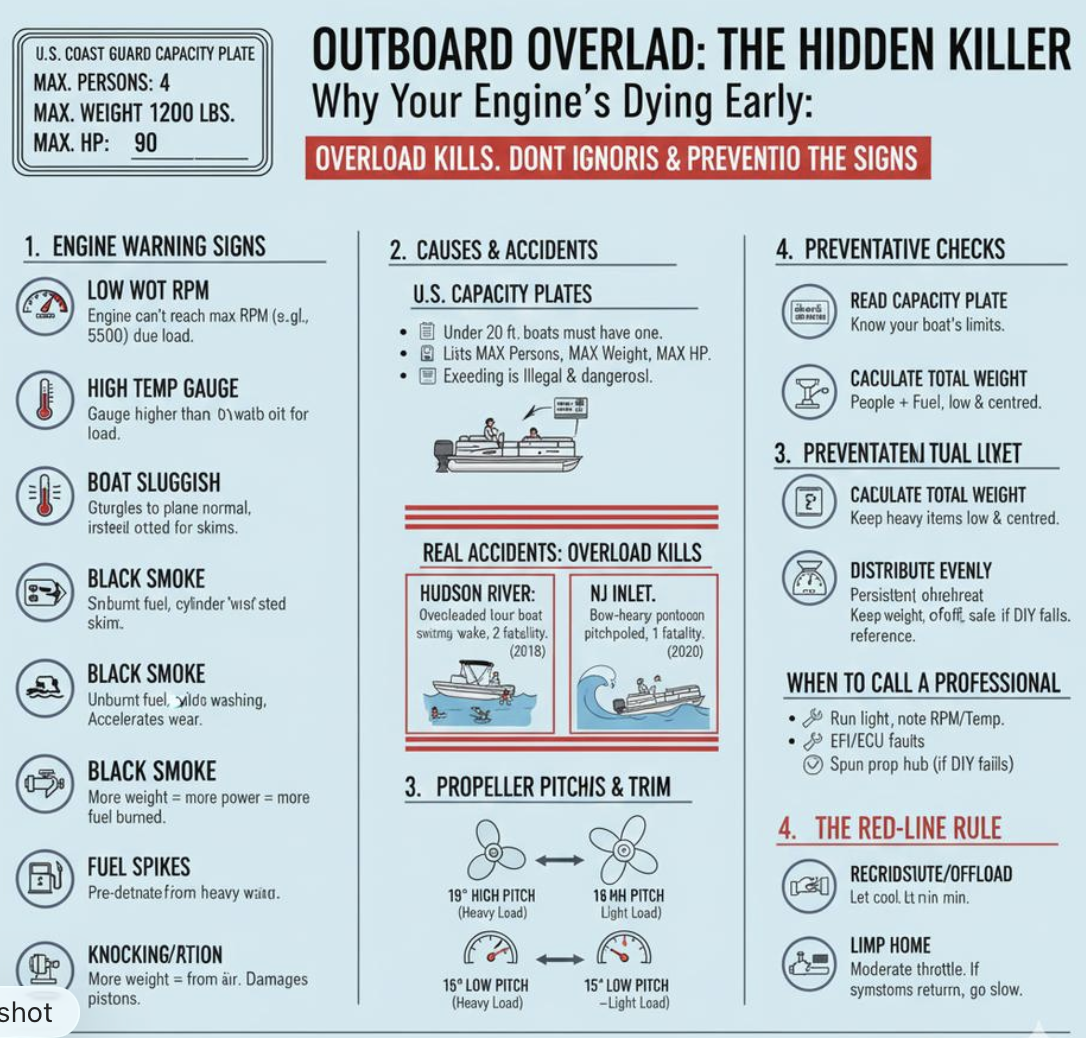
Most recreational boats under 20 feet are required to display a manufacturer-installed capacity plate.
That plate specifies:
- maximum number of persons
- maximum weight
- maximum horsepower
It is not a suggestion.
It is based on:
- flotation
- stability
- safe operating limits
Reference:
U.S. Coast Guard
What Happens When a Boat Is Overloaded?
Even before the boat becomes “unsafe,” performance changes dramatically.
You may notice:
- reduced freeboard
- excessive stern squat
- poor steering response
- increased rolling
- water coming onboard more easily
Real-World Danger
Passengers naturally:
- move around
- gather together
- shift weight suddenly
That movement can destabilize a vessel quickly, especially:
- in turns
- in wakes
- in rough conditions
The Captain’s Responsibility
This is where many people misunderstand the law.
If a professional captain knowingly overloads a vessel:
👉 “the owner wanted it” is NOT a defense.
The captain is still responsible for safe operation.
Potential consequences may include:
- citations
- civil liability
- license consequences
- insurance denial
- criminal exposure in severe incidents
Insurance Reality
If an overloaded vessel is involved in an incident:
- insurance coverage may be challenged
- investigations become more serious
- passenger injury claims escalate quickly
The Pressure Captains Face
This happens more often than people realize.
Owners or guests may say:
- “It’ll be fine”
- “The other captain allowed it”
- “It’s just a short trip”
But professional seamanship means:
👉 knowing when to say no.
Commercial vs Recreational Reality
Commercial passenger operations are often held to even stricter standards regarding:
- passenger count
- stability
- inspections
- safety equipment
This is one reason why legal charter operations matter.
Platforms like BoatnCrew.com help connect customers with professional operators who understand safe and responsible boating practices.
Signs a Boat May Be Overloaded
- waterline sitting unusually low
- excessive leaning
- sluggish acceleration
- taking waves over the stern
- difficulty getting on plane
Final Thought
The water does not care:
- how experienced you are
- how short the trip is
- who pressured the captain
Overloading removes safety margins very quickly.
And once those margins disappear, things can go wrong fast.