

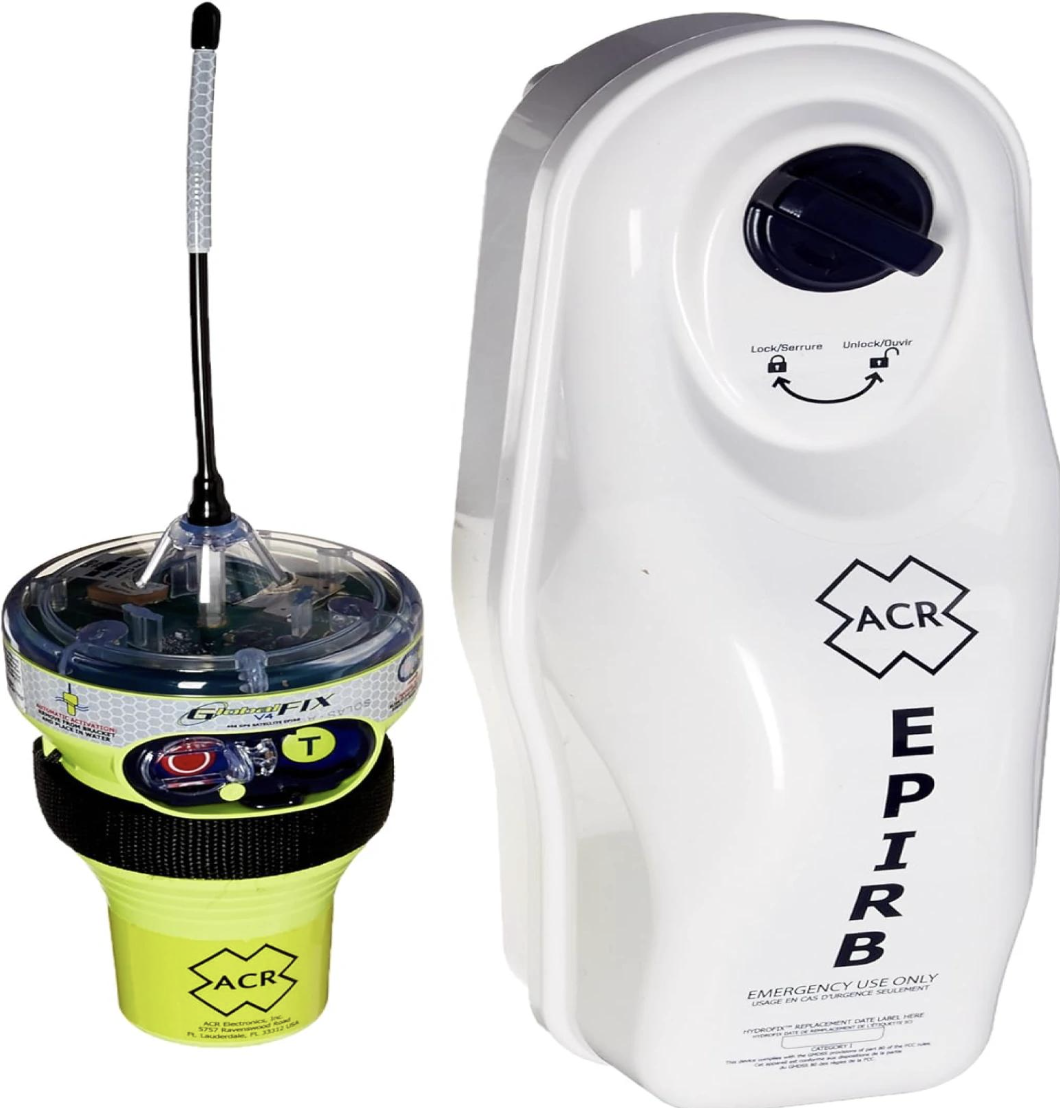
76. EPIRBs Explained: What They Do, Why They Matter, and Where to Install Them
What Is an EPIRB?
EPIRB stands for:
👉 Emergency Position Indicating Radio Beacon
It is a distress beacon designed to transmit your emergency location to search and rescue authorities if your vessel is in serious trouble.
In offshore emergencies:
👉 an EPIRB can save your life.
What Happens When It Activates?
Modern EPIRBs transmit:
- distress signal
- vessel identity
- GPS position (if GPS-enabled)
That information is relayed through satellite systems to rescue coordination centers.
Why It Matters Offshore
The further offshore you travel:
- the weaker VHF coverage becomes
- cell phones stop working
- help takes longer to arrive
An EPIRB works independently of:
- cellular networks
- nearby vessels
- normal radio range
When Should You Carry One?
EPIRBs are strongly recommended for:
- offshore boating
- canyon fishing
- overnight passages
- long-distance cruising
- remote waters
Especially:
👉 50–100+ miles offshore
EPIRB vs VHF Distress Call
A VHF distress call:
- requires someone nearby to hear you
An EPIRB:
- transmits via satellite
- works even if nobody is nearby
Ideally:
👉 you should have both.
Registration Is Critical
Your EPIRB must be registered.
In the United States, registration is handled through:
NOAA
https://beaconregistration.noaa.gov
Registration includes:
- vessel information
- emergency contacts
- trip details
- beacon identification number
Why Registration Matters
If your beacon activates:
rescue authorities immediately see:
- who you are
- what vessel you are on
- emergency contacts
- vessel description
That dramatically improves response efficiency.
Where Should You Mount It?
Your EPIRB should be:
- accessible
- visible
- quickly reachable during emergency
It should NOT:
- be buried in storage
- require tools to reach
- be blocked by equipment
Common Installation Locations
Depending on vessel type:
- helm area
- aft deck
- cockpit bulkhead
- exterior cabin access area
The goal:
👉 immediate access during emergency.
Float-Free vs Manual
Some EPIRBs are:
👉 float-free
Meaning:
- if vessel sinks
- beacon automatically releases and activates
Others require:
👉 manual deployment
Important Mistake
Many boaters:
- buy an EPIRB
- never register it
- never inspect expiration dates
- mount it poorly
That defeats the purpose.
Maintenance Matters
You should periodically check:
- battery expiration
- hydrostatic release date
- mounting condition
- registration updates
Real-World Scenario
Imagine:
- engine failure offshore
- severe weather
- taking on water
- limited communication
A properly registered EPIRB may become:
👉 your direct connection to rescue.
Additional Safety Layer
Serious offshore operators often combine:
- VHF with DSC/MMSI
- EPIRB
- AIS
- satellite communication
- life raft
Because offshore:
👉 redundancy matters.
Platform Note
Boat owners and captains operating through BoatnCrew.com should evaluate offshore safety equipment carefully before offering long-distance or offshore trips.
Final Thought
Most boaters hope they never use an EPIRB.
But when things go truly wrong offshore:
👉 few devices are more important.