191. Distress Calls on VHF: When to Call MAYDAY, PAN-PAN, and SECURITE
Your VHF Radio Is More Than a Convenience
Many boaters carry a VHF radio because it is required or recommended.
But in a real emergency:
👉 it may become your most important piece of equipment.
The problem is:
Most recreational boaters do not know:
- when to call
- what to say
- how serious certain calls are
First: Monitor Channel 16
Channel 16 is the international hailing and distress frequency.
You should generally monitor:
👉 VHF Channel 16
Especially:
- offshore
- in busy waterways
- at night
- in reduced visibility
Commercial traffic in areas like the Hudson or New York Harbor may also monitor:
👉 Channel 13 (bridge-to-bridge)
Reference:
U.S. Coast Guard Navigation Center
MAYDAY — Grave and Imminent Danger
A MAYDAY call is reserved for:
👉 immediate danger to life or vessel
Examples:
- sinking
- fire onboard
- person overboard in severe conditions
- collision taking on water
- abandoning ship
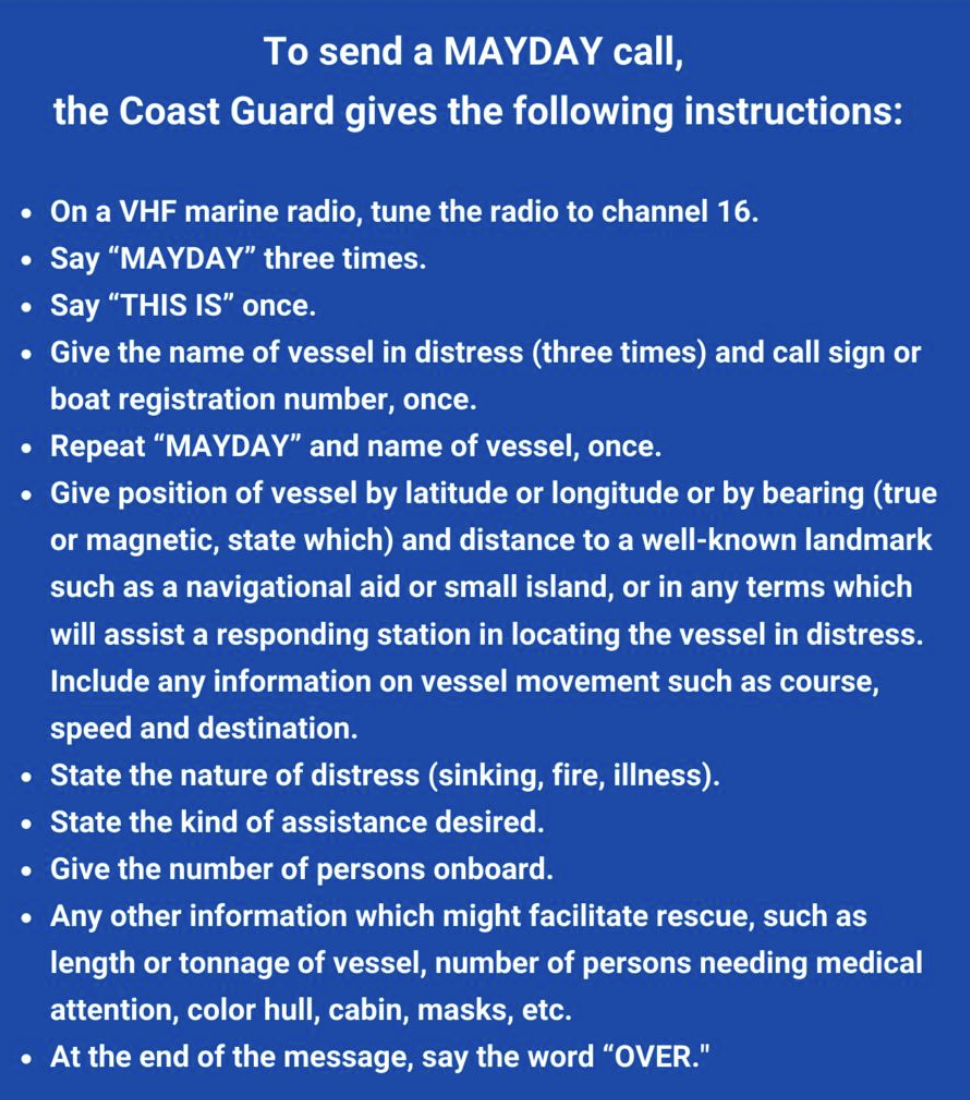
Proper MAYDAY Format
Repeat clearly:
MAYDAY, MAYDAY, MAYDAY
This is vessel [name repeated 3 times]
Position: [latitude/longitude or clear location]
Nature of distress
Number of people onboard
Description of vessel
Assistance required
PAN-PAN (Pronounced PON-PON — Urgent, But Not Yet Life-Threatening
PAN-PAN is used when:
👉 the situation is serious but not immediately life-threatening
Examples:
- disabled vessel drifting
- mechanical failure
- uncertain navigation situation
- medical concern not yet critical
Why PAN-PAN Matters
It alerts nearby vessels and authorities that:
👉 you may need help soon
before the situation becomes a MAYDAY.
SECURITE (or you can say "Security Call")— Safety Information Broadcast
SECURITE is used to communicate:
- navigational hazards
- floating debris
- weather dangers
- safety information
Often used by:
- Coast Guard
- commercial operators
- bridge authorities
Your Location Is Critical
The most important information during distress:
👉 your position
And this is where many boaters struggle.
Latitude and Longitude
You should know how to properly read coordinates from your:
- chartplotter
- GPS
- navigation app
Speak slowly and clearly.
Example:
“North 40 degrees, 42 decimal 5 minutes…”
“West 074 degrees, 01 decimal 2 minutes…”
If You Don’t Know Coordinates
Use:
- nearby markers
- bridges
- landmarks
- channel references
Anything is better than silence.
General Radio Etiquette Matters
Your radio is not:
- a CB radio
- casual chat line
- entertainment device
Keep transmissions:
- short
- clear
- professional
Avoid:
- yelling
- unnecessary chatter
- tying up Channel 16
Real-World Mistake
Many people wait too long to call for help because they:
- feel embarrassed
- think they can fix it
- don’t want to “overreact”
That delay can become deadly offshore or in deteriorating weather.
Important Backup Systems
If you regularly travel offshore:
consider:
- EPIRB
- AIS distress capability
- satellite communication
- SSB radio
A VHF may eventually lose range far offshore.
Platform Note
Boat owners and captains operating through BoatnCrew.com should ensure all operators and crew understand emergency communication procedures before departure.
Final Thought
A distress call is not failure.
Waiting too long to make one can be.